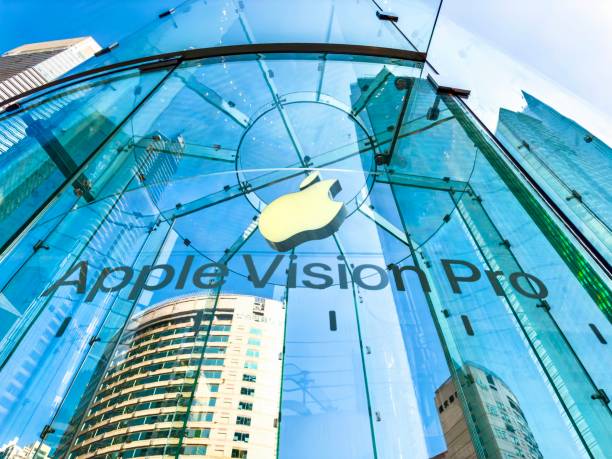

The Product That Nobody Knows Quite What to Make Of
Apple Vision Pro launched in February 2024 at $3,499 and generated the most polarised product coverage in recent memory: genuinely enthusiastic reviews from early adopters who described transformative experiences, alongside sceptical coverage from observers who questioned whether any amount of capability justifies the price and the social awkwardness of wearing a computer on your face in public.
Both responses contain truth. Vision Pro is technically impressive in ways that are difficult to communicate without trying it — the display resolution, eye tracking precision, and passthrough quality are meaningfully beyond previous AR/VR hardware. It’s also a product solving problems that most people haven’t articulated as problems, at a price that’s inaccessible to all but a narrow slice of early adopters, in a form factor that creates real social dynamics that product reviewers in isolated demo rooms don’t fully capture.
What Spatial Computing Actually Means
Spatial computing is Apple’s marketing term for the category that includes both augmented reality (digital content overlaid on the real environment) and virtual reality (fully immersive digital environments) with a focus on the spatial relationship between digital content and physical space. In Vision Pro’s implementation, apps appear as floating windows in the physical space around the user; immersive experiences can gradually replace the physical environment; and the system maintains awareness of the physical environment (detecting surfaces, avoiding physical objects) even in immersive modes.
The foundational technology: micro-OLED displays providing extremely high pixel density, eye tracking that detects where the user is looking for interaction without controllers, hand gesture recognition for input, spatial audio that ties sound to the apparent position of virtual objects, and passthrough cameras that provide a video representation of the physical environment when the user isn’t in a fully immersive experience. The combination produces an experience that’s genuinely different from previous AR/VR products, not just iteratively better.
The Actual Use Cases That Work
The Vision Pro use cases that consistently receive positive feedback from sustained users: immersive media consumption (large virtual screen in any physical space, spatial audio, full-resolution content that benefits from the display quality), focused work in distraction-reduced environments (the ability to create a virtual workspace that blocks out a noisy physical environment while maintaining natural hand and keyboard interaction), spatial video playback (3D captured memories that provide a presence feeling that conventional video doesn’t), and FaceTime Persona calls (which have quality that exceeds conventional video calling for some users).
The use cases that haven’t materialised at scale: productivity work as a primary computing environment (the combination of weight, battery life, and heat generation makes extended daily computing on Vision Pro uncomfortable for most users), social computing in public spaces (the social reality of wearing a spatial computer in public remains an obstacle that technical capability doesn’t resolve), and the enterprise applications that spatial computing’s proponents imagined for remote collaboration and spatial design review.
The Competitive Landscape and What Comes Next
Meta’s Quest 3 ($499) occupies the same broad product category at 7% of Vision Pro’s price with different capabilities and trade-offs: less display resolution and precision, but full hand and controller input, a much larger app and game ecosystem, and a weight and form factor that’s more comfortable for extended use. Quest 3 has sold at volumes that Vision Pro, at its price point, cannot approach.
The spatial computing category’s development follows a pattern familiar from other computing platform transitions: an expensive, technically impressive initial product for early adopters with enthusiast use cases, followed by lower-cost iterations that bring the platform to wider audiences as the manufacturing cost falls and the use case library grows. Apple’s reported development of a less expensive, lighter Vision product line and Meta’s continued Quest iteration both suggest a market that both companies see as significant at the lower price points that early products can’t achieve.
What to Actually Think About This Technology
The balanced assessment: spatial computing represents a genuinely new computing paradigm that will likely be significant at some point, but the timeline to meaningful mainstream adoption is longer than the excitement around Vision Pro suggests. The combination of price, form factor, battery life, social dynamics, and use case maturity that would make spatial computing a daily-use technology for most people isn’t present in current products.
Following the category’s development without making purchasing decisions based on its potential future rather than its current reality is the calibrated stance. Vision Pro is an impressive first-generation product for people with specific use cases and the budget for first-generation pricing. For everyone else, watching the second and third generation products develop — as manufacturing costs fall, weight decreases, battery life improves, and the software ecosystem matures — is the more economically rational position.